
Wealth Insights
Bruised Not Broken: Why Bonds Can Still Play an Important Role in Portfolios
6 minute read time
I received a marketing email this morning from a well-known asset manager with the title, “Bonds are a Return Free Risk.” The provocative headline was well-timed. Consumers are dealing with inflation and rising mortgage rates, while their bond portfolios are in the red. It is an opportune time to sell investment products that are less correlated with interest rates, which is exactly what the email proceeded to do.
But bailing on bonds when they are down is a little like selling stocks after a large correction. With stocks, selling low means forfeiting future growth potential. With bonds, selling low means sacrificing future income potential, and today that income potential is the most attractive it has been in two decades.
Bonds also offer features that most other investments do not. They represent a contractual obligation to pay interest and principal and generally have a senior claim to stocks in the event of bankruptcy. These features - income and principal-protection - are why we believe bonds remain a staple of balanced portfolios, even when alternative assets are added for greater diversification.
What’s Actually Happened in the Bond Market This Year?
Interest rates have moved significantly higher during 2026. Intermediate Treasury yields increased roughly 1.0% to 1.5% through the end of September, with the 2-year Treasury yield rising to approximately 4.89% and the 10-year Treasury yield reaching approximately 5.29%. As bond yields rise, the prices of existing bonds decline, resulting in negative short-term returns. The Bloomberg U.S. Universal Index, a common benchmark, declined approximately 2.6% year-to-date through September. Short-term rates have risen more than long-term rates, flattening the yield curve [Figure 1].
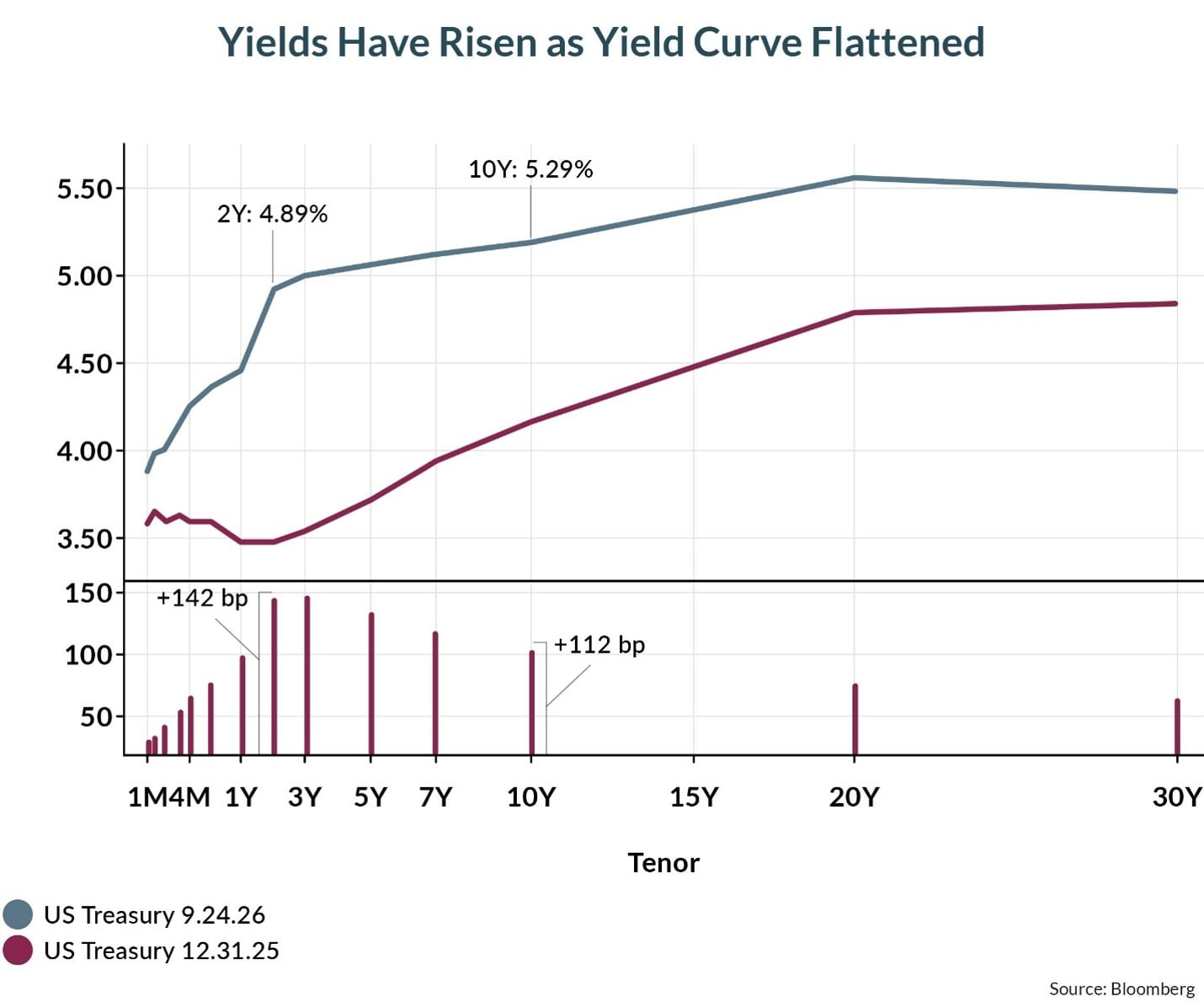
The primary drivers behind higher yields have been resilient economic growth and inflation that has remained above the Federal Reserve's long-term target of 2%. U.S. real GDP grew at an annualized rate of 2.5% in the first quarter and 2.2% in the second quarter of 2026, and The Atlanta Fed estimates third-quarter GDP will grow 3.7%, boosted by continued AI investment.
The war in Iran continues to have an outsized impact on inflation. The Consumer Price Index increased 3.4% over the 12 months ending in August 2026, while core inflation, which excludes food and energy, rose a lesser 2.4% [Figure 2].
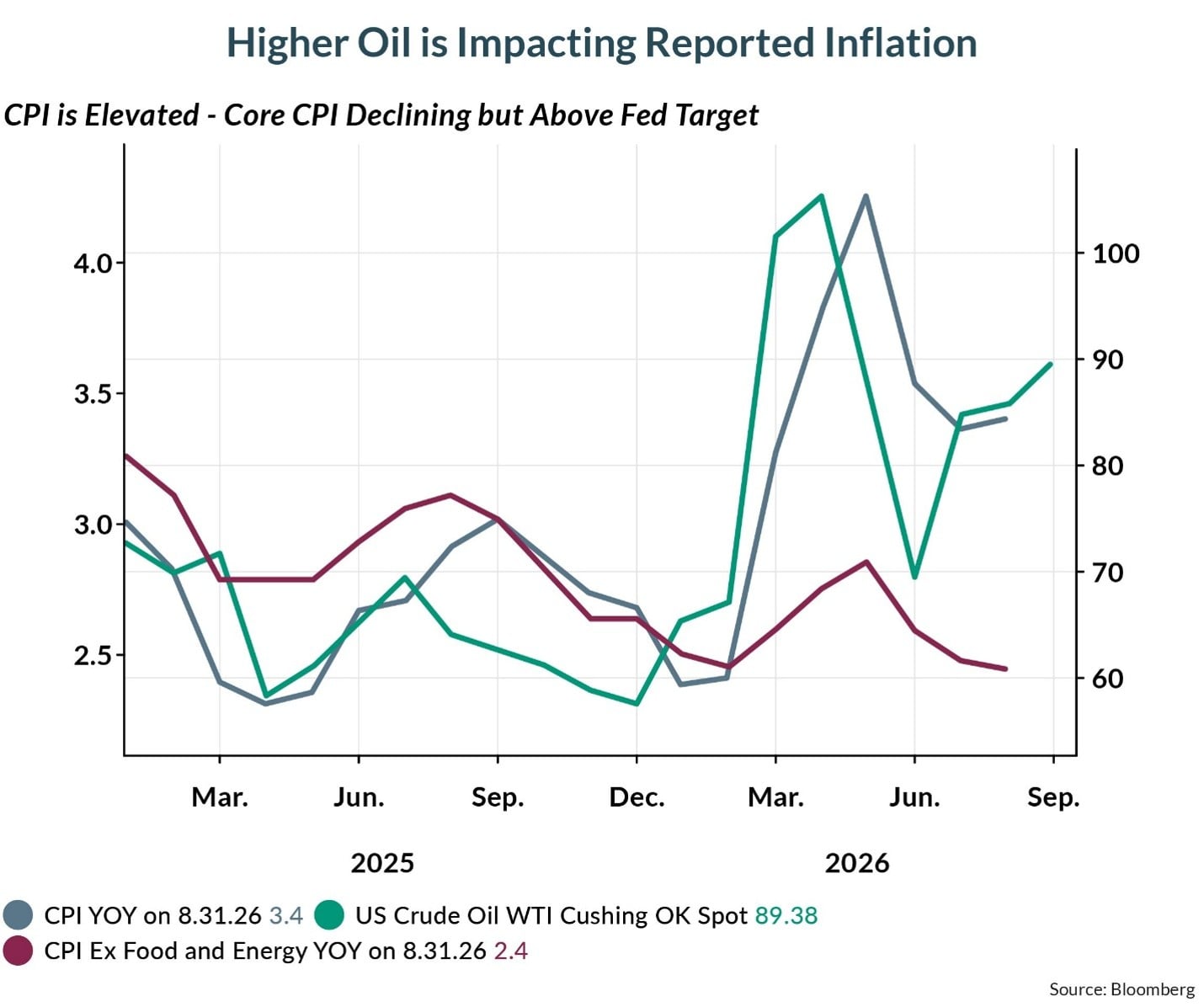
In response to persistent inflation, on September 16 the Fed raised the federal funds rate - which influences short-term interest rates - to a range of 3.75%–4.00%, and additional increases are anticipated.
Investors should note, however, that rising short-term rates do not necessarily lead to rising long-term rates. If markets believe the Fed will succeed in slowing inflation, long-term interest rates could decline, benefiting bond investors.
Why This Environment Is Different Than 2022
Some investors understandably compare today's market to 2022, which was one of the worst years for bonds in decades. But there is one key difference: the starting yield. In early 2022, the 10-year Treasury yield began the year near historical lows. Investors were earning little income from their bond portfolios, leaving almost no cushion to offset the impact of rising rates. When yields increased sharply, price declines overwhelmed the limited income generated by bonds.
Today, investors can earn substantially more income. Many taxable bond strategies offer yields of 4.5% to 5.8%, while municipal bond strategies yield approximately 3.9% to 4.7% on a federally tax-exempt basis.
Higher starting yields matter because yield is the single most important driver of future bond returns. Even if rates rise further, investors now receive significantly more income while they wait.
Consider a bond portfolio yielding 5%. Even if market prices experience modest declines, a substantial portion of those losses may be offset by coupon income collected over time. The higher that starting yield becomes, the more attractive the long-term return outlook becomes. The market's weakness today is helping create the potential for stronger returns tomorrow.
Should interest rates begin to fall, returns in excess of bonds’ interest income are likely, as happened in 2020, 2023, and 2025.
For investors with longer time horizons, higher current yields may justify maintaining or even extending maturity exposure to lock in attractive income streams for years to come. Your advisor can help you assess the impact of portfolio changes on your specific situation.
Consider Tax Loss Opportunities and Municipal Bonds
The investment world is unique in that losses can create opportunities. Tax-loss harvesting involves selling investments at a loss in a taxable account to offset capital gains and reduce overall tax liability – an effective way to make lemonade out of lemons. Our advisors can help clients exchange positions with losses for other investments, generating tax losses that may offset capital gains and up to $3,000 of ordinary income. Many clients with a taxable account may benefit from this strategy, which can improve after-tax returns while maintaining a similar level of income and without missing out on a market rebound.
Higher yields have also improved the appeal of tax-exempt municipal bonds. Tax-equivalent yields on some municipal securities are approaching 7%-8% for investors in higher tax brackets who may also be subject to the 3.8% federal Net Investment Income Tax, which applies to certain high-earning individuals, estates, and trusts. For some clients, moving from a short-term municipal portfolio to a longer-term portfolio could generate valuable losses while increasing income.
Investors should talk to their advisor about current and expected future tax brackets when determining whether municipals make sense within their broader financial plan.
A Little History Helps
Whenever headlines and marketing emails begin stirring emotions, it can help to step back and consider the broader picture. Although low-yielding bonds did not benefit investors in 2022, bonds had a strong track record before the 2008 financial crisis of acting as portfolio ballast by providing stability and diversification during stock market declines [Figure 3].
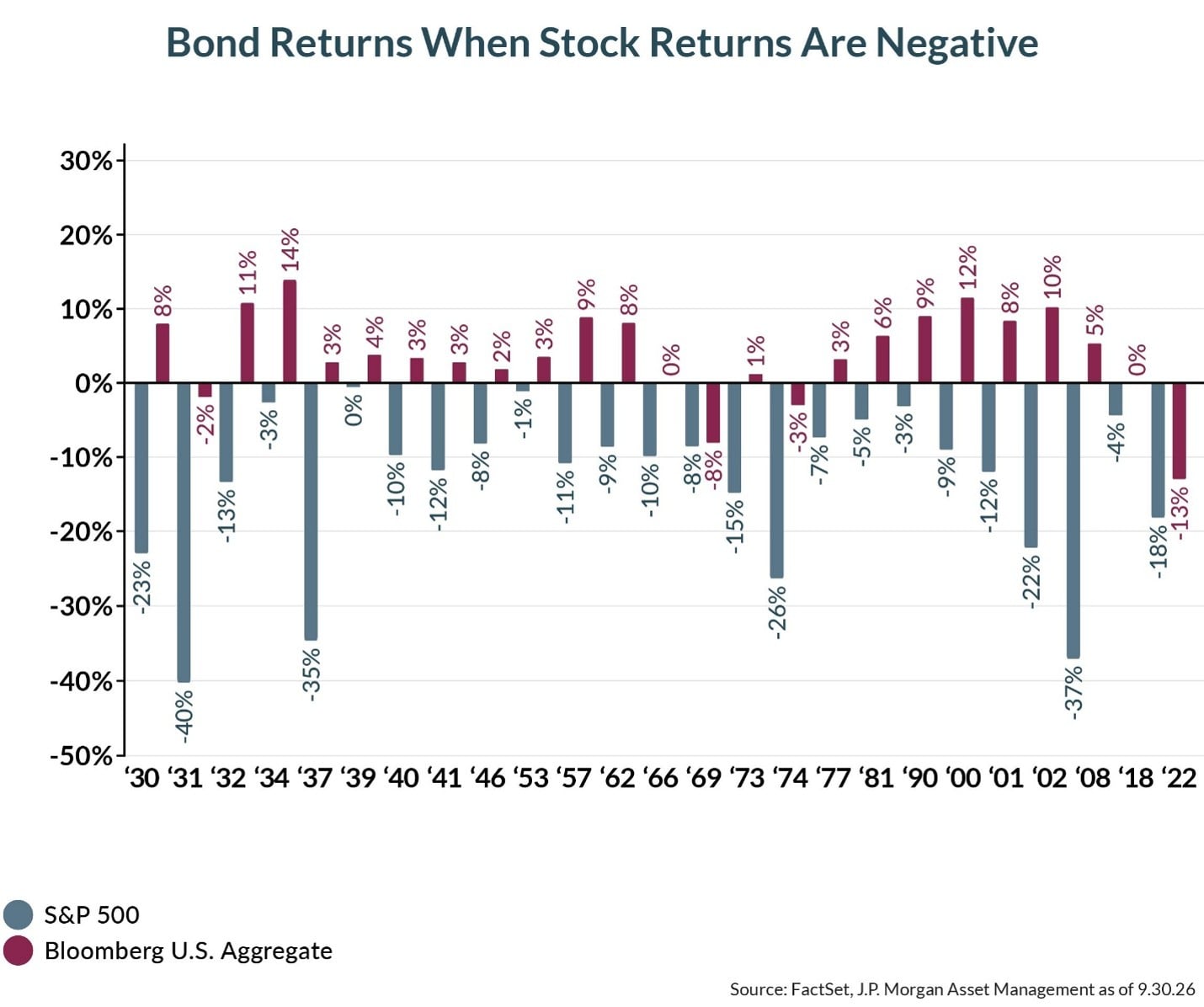
In the aftermath of the crisis, the Federal Reserve engineered a period of artificially low interest rates that robbed investors of income while reducing the diversification benefits of fixed income.
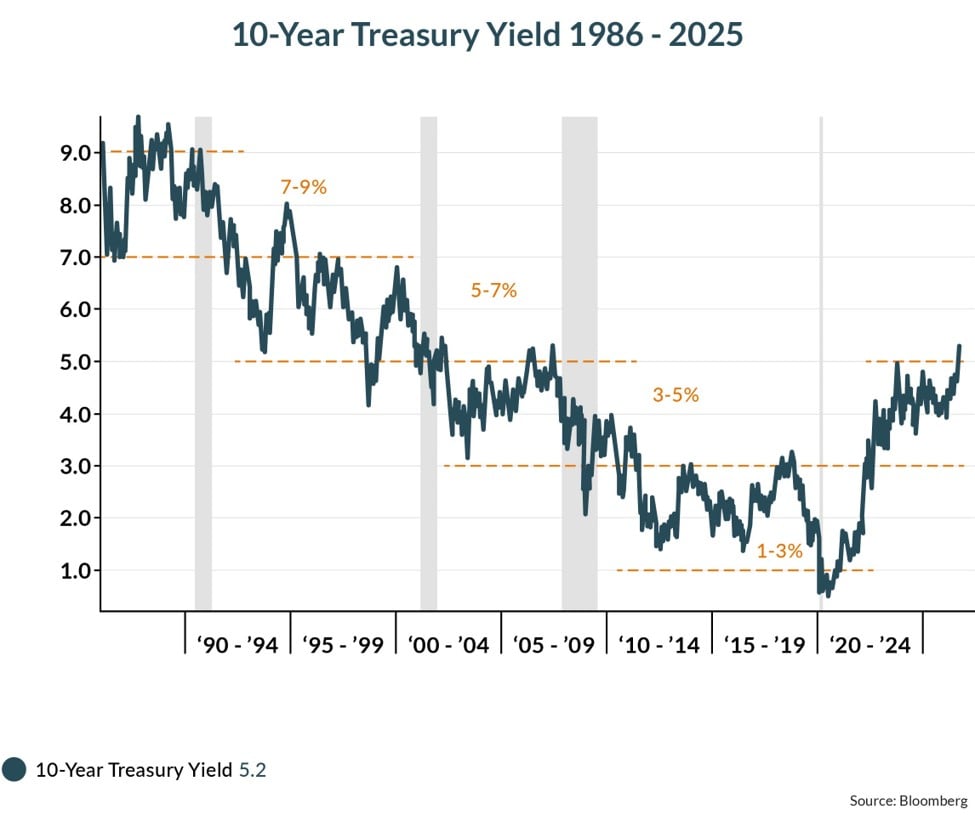
Today, interest rates are normalizing, allowing investors to once again earn an above-inflation return on bonds. The “real,” or after inflation yield on a 10-year Treasury today is nearly 3%, while the nominal yield of 5.3% has returned to pre-crisis levels [Figure 4]. The gray shaded areas in the chart below are recessions, when falling interest rates provided a tailwind to bond returns.
Assess then Act, Not the Other Way Around
2026 has disappointed bond investors. We entered the year expecting the Federal Reserve to cut interest rates. The war in Iran and stickier than expected inflation changed that outlook. Nevertheless, the higher starting yields have limited bond losses compared with 2022, while today's yields offer total return opportunities that are as compelling as any seen in the past 20 years.
Inflation remains above the Federal Reserve's long-term target, and interest rates may stay elevated. However, investors are now compensated with materially higher yields, creating stronger income streams, better tax-loss harvesting opportunities, and improved long-term return potential.
Rather than focusing solely on recent price declines, investors should consider what higher yields could mean in the years ahead. In our view, the most important story in fixed income today is not the losses that have occurred, but the future opportunities that higher yields may create:
-
- Generating income.
- Preserving capital over longer horizons.
- Providing diversification relative to stocks.
- Supporting future spending needs.
We suggest investors discuss today’s opportunity set with their advisor before throwing in the towel on a bruised but not broken asset class.
This information is for educational and illustrative purposes only and should not be used or construed as financial advice, an offer to sell, a solicitation, an offer to buy or a recommendation for any security. Opinions expressed herein are as of the date of this report and do not necessarily represent the views of Johnson Financial Group and/or its affiliates. Johnson Financial Group and/or its affiliates may issue reports or have opinions that are inconsistent with this report. Johnson Financial Group and/or its affiliates do not warrant the accuracy or completeness of information contained herein. Such information is subject to change without notice and is not intended to influence your investment decisions. Johnson Financial Group and/or its affiliates do not provide legal or tax advice to clients. You should review your particular circumstances with your independent legal and tax advisors. Whether any planned tax result is realized by you depends on the specific facts of your own situation at the time your taxes are prepared. Past performance is no guarantee of future results. All performance data, while deemed obtained from reliable sources, are not guaranteed for accuracy. Not for use as a primary basis of investment decisions. Not to be construed to meet the needs of any particular investor. Asset allocation and diversification do not assure or guarantee better performance and cannot eliminate the risk of investment losses. Certain investments, like real estate, equity investments and fixed income securities, carry a certain degree of risk and may not be suitable for all investors. An investor could lose all or a substantial amount of his or her investment. Johnson Financial Group is the parent company of Johnson Bank and Johnson Wealth Inc. NOT FDIC INSURED * NO BANK GUARANTEE * MAY LOSE VALUE
ABOUT THE AUTHOR