Save on back-to-school shopping with our advisor-tested financial tips, organized by elementary, middle, high school and college grade levels, to help your family spend smarter this school year.
Back-to-school shopping can feel a lot like a second round of holiday shopping. Between supply lists, new clothes, tech and everything in between, it adds up fast. According to the National Retail Federation, families with school-age children spend an average of $874.68 on K–12 supplies, while those sending students to college average $1,364.75 per household. The good news? You don't have to figure it out alone.
We asked our advisors to share the tips that have actually worked for them as parents, as financial professionals and as people who've been in the trenches of back-to-school season more than once. Here's what they came up with, broken down by grade level.
Elementary School
How can you save on elementary school supplies?
The early school years are a great time to build smart spending habits and a few small tweaks can save you a surprising amount of time and money.
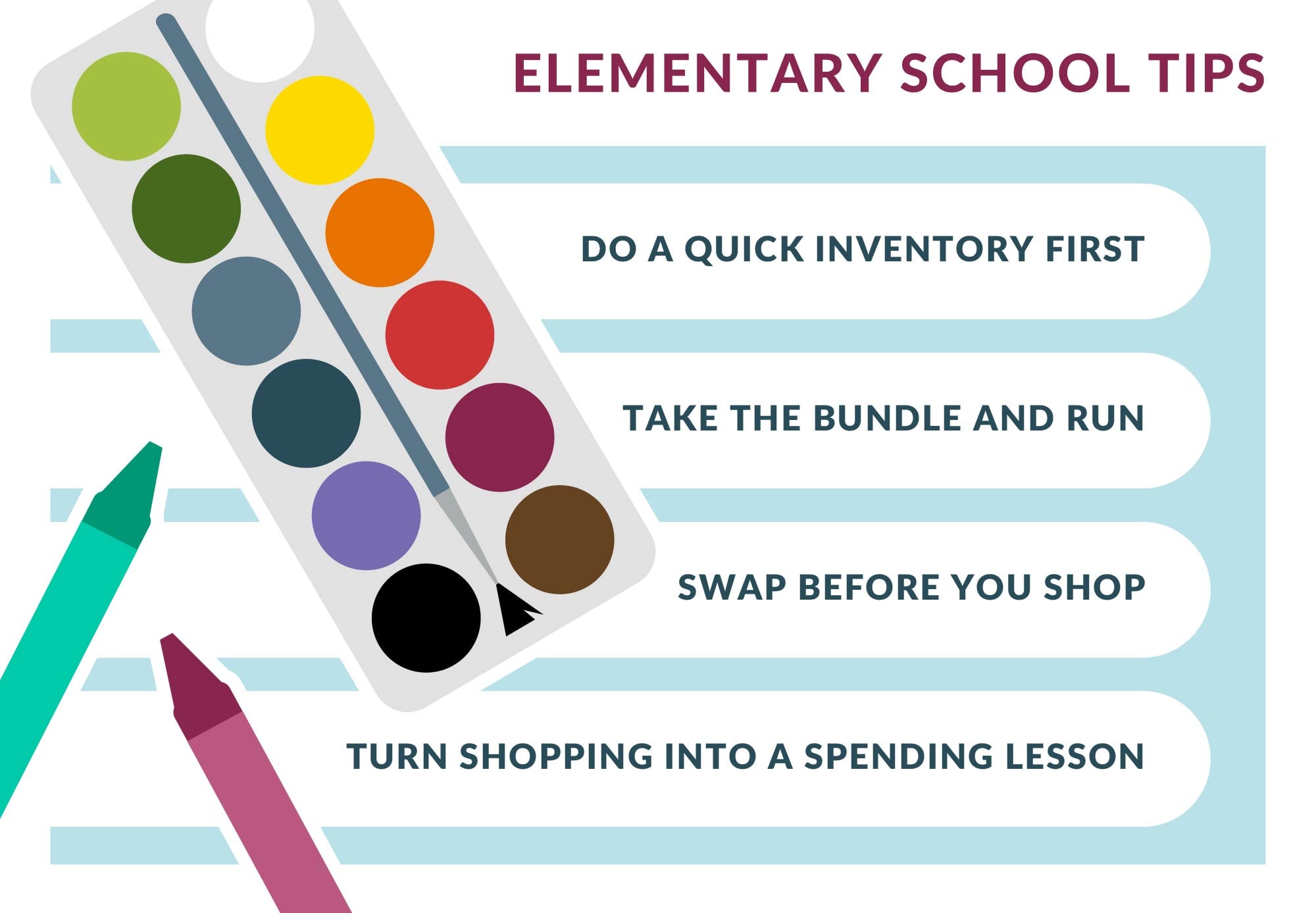
Do a quick inventory first: Before you even look at the supply list, dig out last year's backpack. Treasury Management Consultant, Josh Weber swears by this tip, "Always check prior-year supplies before shopping for the new school year list. You can avoid buying duplicate items." Scissors, rulers and folders have a way of surviving the school year just fine.
Take the bundle and run: If your school offers pre-packaged supply bundles, just say yes. VP Treasury Management Consultant, Angela Rust puts it plainly, "Your time is valuable. If your school offers pre-bundled school supplies, do it. It's worth it!" Schools often get bulk pricing that you can't find on your own and you'll skip the crowded aisles entirely.
Swap before you shop: A lot of schools run uniform swap programs and they're worth using. Angela Rust recommends donating what your kids have outgrown and picking up what they need for the year ahead. It's a win for your budget and your community.
Turn shopping into a spending lesson:AVP Branch Manager, Jon Jones recommends giving children a small spending limit and letting them help compare prices, use coupons and choose between brands. “It teaches money value while helping families avoid impulse purchases,” Jones explains. It’s a simple exercise that pays dividends long after the school year starts.
Middle School
How do you manage back-to-school spending in middle school?
Middle school is when things can get a little more complicated, when the peer pressure is real and the shopping lists get longer. Here's how to stay ahead of it.
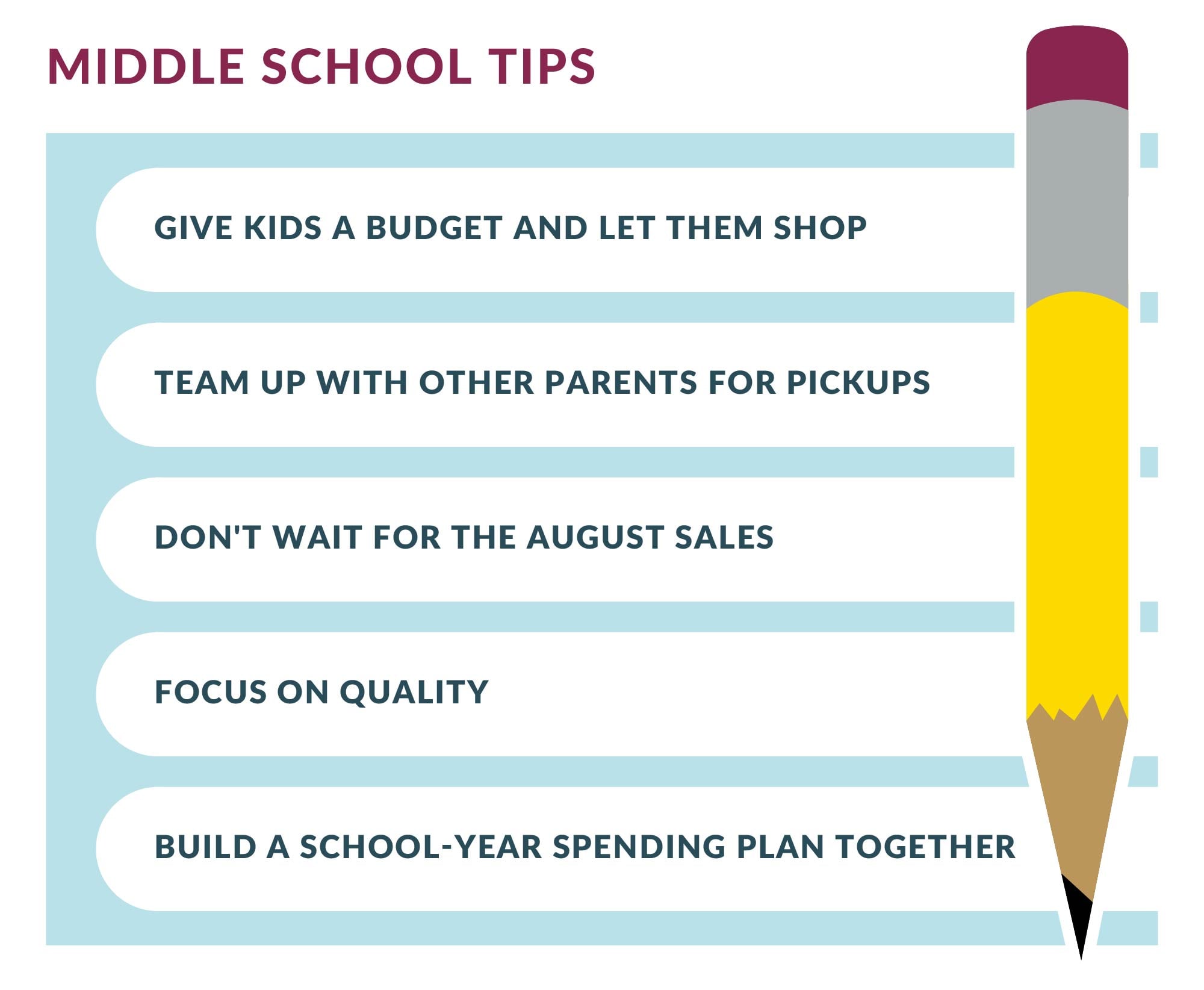
Give kids a budget and let them shop:VP Wealth Advisor, Allison Moeschberger loves this approach, "Let kids choose some of their own supplies within a budget. They may appreciate the items more and it's a chance for a quick financial lesson." It's a small thing that teaches big skills and they’re a lot less likely to lose something they picked out themselves.
Team up with other parents for pickups:Treasury Management Portfolio Manager, Shana Mallory figured out a simple way to cut both costs and chaos, "I shared pickup responsibilities with two other moms. This arrangement helped reduce gas expenses and allowed me to avoid leaving the office early every day." If you have neighbors or friends with kids at the same school, it's worth the conversation.
Don't wait for the August sales: This one comes straight from experience. Angela Rust, who’s a mom of a teenage daughter, says, "Start shopping in July because if you wait for all the sales or late August, most of the best options will be picked over." The best selection goes fast.
Focus on quality: Instead of buying a new backpack every year, Shana Mallory made a deal with her daughter, "We purchase a really nice backpack one year with the understanding that she will not get a new one the next year. Treat it with care." One good backpack, taken care of, beats three cheap ones any day.
Build a school-year spending plan together:Jon Jones suggests having your children create a simple spending plan for the school year that covers lunches, activities and entertainment. “Learning to track spending early helps build strong financial habits before larger expenses come along,” he explains. Starting small makes the habit stick.
High School
What are the best ways to save on high school expenses?
High school means bigger expenses and more moving parts from laptops and specialty supplies to thinking about what comes next. These tips can help you make smarter calls.
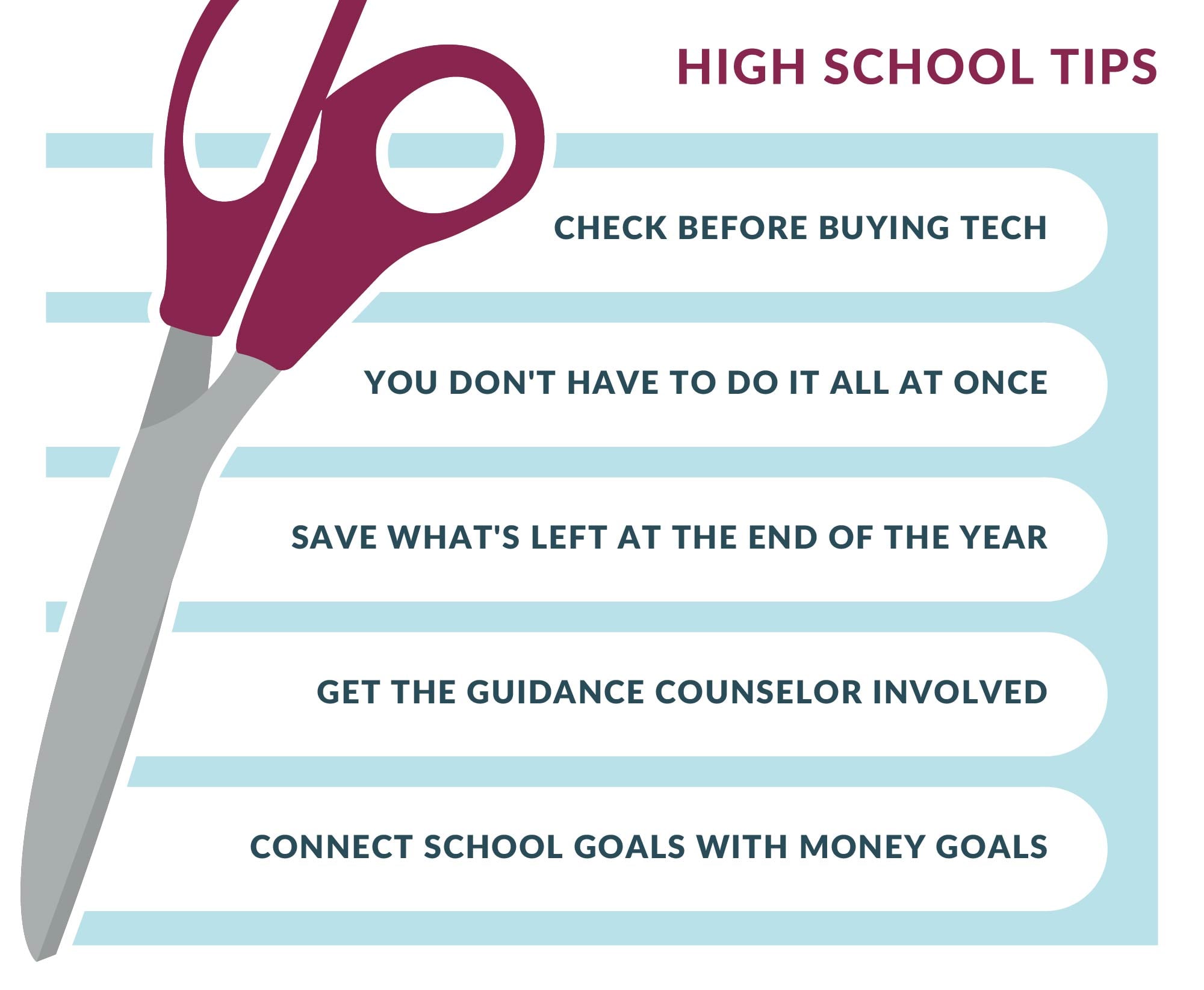
Check before buying tech: When it comes to laptops or Chromebooks, Josh Weber has a simple piece of advice, "Contact your school about buying laptops or Chromebooks. They can usually buy in bulk and get you a better price. They also will make sure you are buying the correct model(s)."Shana Mallory also recommends Best Buy’s Open-Box for electronics, "Best Buy offers Open-Box products for discount. My daughter's laptop was brand new with a small scratch — $200 off." Bulk pricing and refurbished items often provide significant savings.
You don't have to do it all at once: Allison Moeschberger is a fan of spreading things out, "Don't feel like you need to buy everything in one trip. Shop sales, compare prices and spread purchases over several weeks or months." Pacing yourself gives you more room to find deals and helps avoid the overwhelm.
Save what's left at the end of the year:Shana Mallory has a system, "I collect all unused school supplies at the end of the school year and place them in a box for the next year." It sounds simple because it is and it can wipe out a big chunk of your supply list before you ever step foot in a store.
Get the guidance counselor involved: Allison Moeschberger also reminds families not to overlook the resources right in the building, "Utilize your school's guidance counselor and other local resources to identify scholarship opportunities." A lot of local scholarships go unclaimed every year simply because families don't know to ask.
Connect school goals with money goals:Jon Jones encourages students to tie their school-year ambitions directly to a savings strategy. Whether it’s saving for a car, sports fees, prom or college, “Setting up a dedicated savings account and automating deposits can make those goals feel achievable.”
College
How should college students and families prepare financially?
College is where financial habits stop being a lesson and start being real life. These tips help students, and their families, start on solid footing.
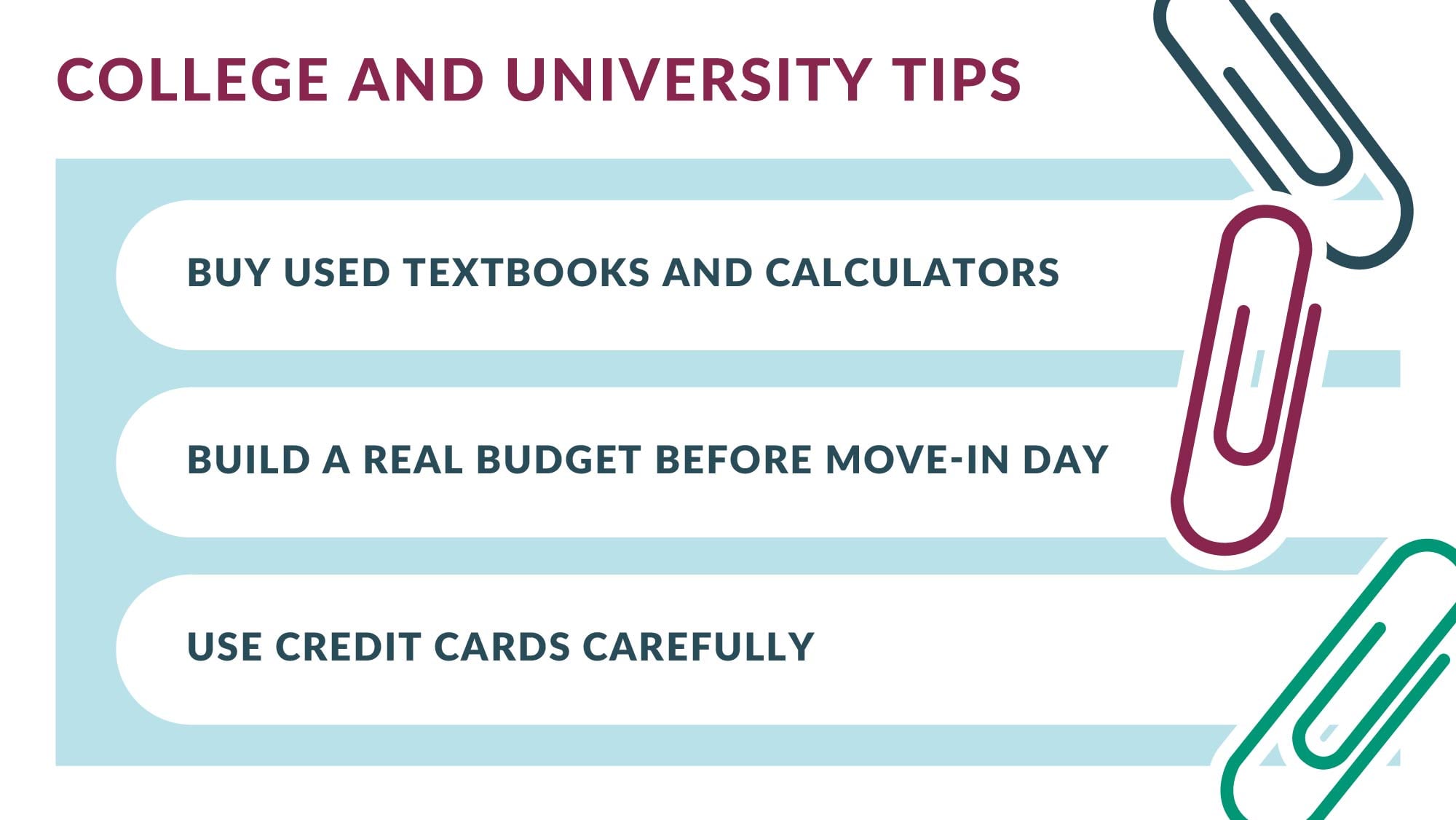
Go secondhand on textbooks and calculators: Textbook costs are one of the biggest college budget surprises. Allison Moeschberger has a simple fix:"Consider secondhand books and calculators instead of buying new." Used bookstores, campus exchange programs and sites like Chegg or AbeBooks can cut those costs dramatically. Graphing calculators are another big one — they hold up well and are easy to find used.
Build a real budget before move-in day:Allison Moeschberger's advice for college students is straightforward and important: "Help your student create a monthly budget covering items like housing, food, transportation, entertainment, and savings." Having actual numbers for each category makes it so much easier for students to make good decisions day to day and it sets them up with a skill they'll use for the rest of their lives.
Use credit cards carefully: Jon Jones advises students“Pay balances in full whenever possible to avoid building costly debt.”
The Bottom Line
You don't need to overhaul your whole approach to save money this back-to-school season. Whether it's shopping a little earlier, swapping uniforms with another family or sitting down to build a simple budget with your college student, small decisions add up to real savings over time.
We hope these tips make this school year a little easier on your wallet. Need help saving for college or setting your children up for financial success? Connect with an advisor to understand your options.
Frequently Asked Questions
Start in July, not late August. Josh Weber and Angela Rust both recommend getting ahead of the rush. The best selection sells out fast and waiting for end-of-summer sales often means choosing from what's left over.
Give them a set budget and let them make their own choices within it. Allison Moeschberger has seen this work firsthand. Kids who pick their own supplies tend to take better care of them and the exercise gives parents a natural opening to talk about prioritizing and trade-offs.
Save unused supplies at the end of each school year. Shana Mallory boxes everything up and starts the next school year's list from there. Paired with a quick inventory check before you shop, this habit alone can eliminate a surprising portion of your annual list.
Subscribe
Choose the insights that matter to you and we'll send regular updates straight to your inbox — from wealth strategies and industry trends to stories worth your time.