The headlines coming out of Iran are unsettling. Any loss of life is heartbreaking and the uncertainty surrounding conflict can weigh heavily on all of us. It’s natural for this kind of news to create anxiety, these moments can touch us on a personal level.
But moments like this are exactly why we spend so much time talking about long term discipline and the difference between news and noise. The world can feel unstable, yet markets often absorb shocks better than the headlines suggest.
What History Actually Shows
Geopolitical events tend to feel enormous in the moment. They dominate the news cycle, crowd out other stories and leave the impression that markets must be repricing everything.
Yet the historical record tells a different story. Across decades of data, market pullbacks tied to geopolitical events have usually been:
- Modest
- Short lived
- Followed by quick recoveries
This isn’t optimism — it’s simply what has happened over and over again. Even significant conflicts have rarely altered the compounding power of diversified portfolios. Markets care far more about interest rates, earnings and employment than they do about even intense geopolitical episodes. The table below lists several market declines related to geopolitical events. On average, such sell-offs last 11 days, with an average drawdown a little over 5% and a quick recovery. Patience and a cool head were rewarded every time.
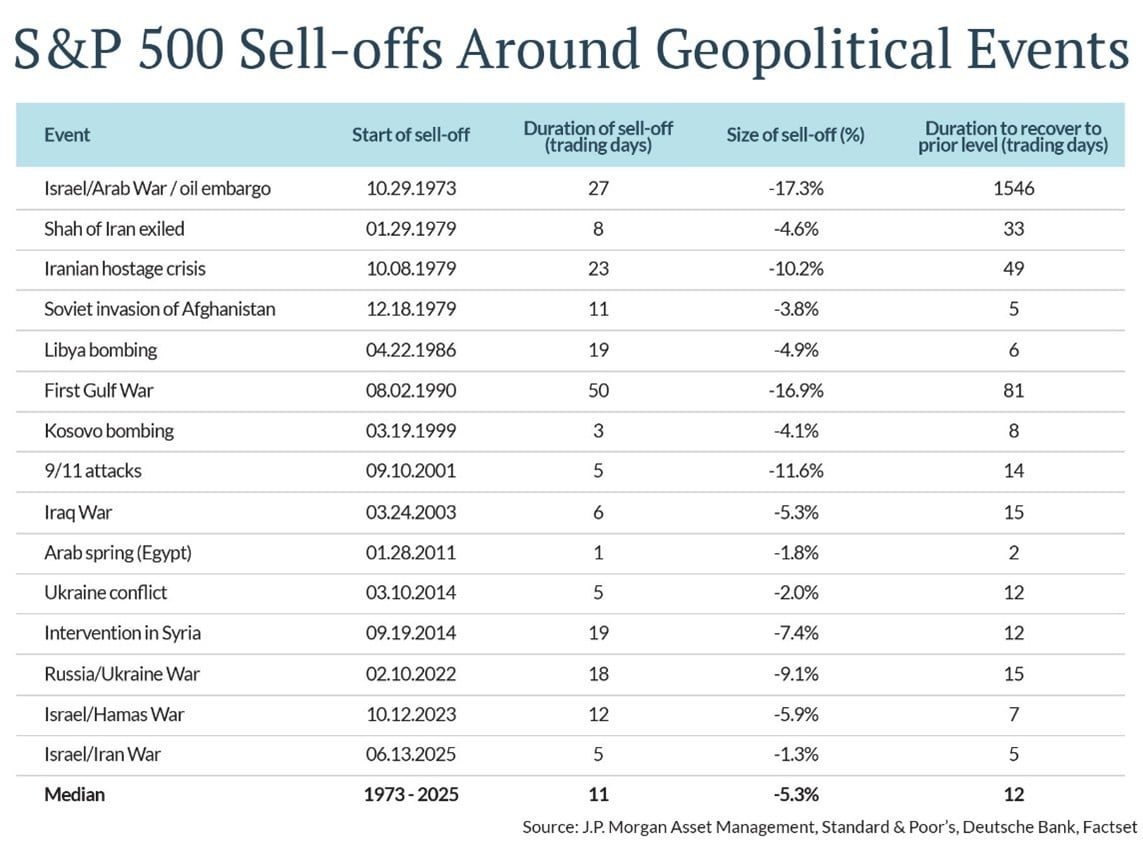
If and when the situation calms, markets have a habit of recalibrating far faster than most people expect. That’s the pattern we’ve seen time and again — from conflicts, policy scares and all kinds of unexpected shocks.
Oil Matters but Not as Much as You Might Think
The latest escalation in Iran has created genuine disruption in the Persian Gulf. Some energy facilities have gone offline and shipping lanes have slowed or closed. A meaningful share of the global oil trade runs through the Strait of Hormuz, and when that flow is interrupted, markets take notice.
Oil plays a smaller role in consumer spending than it did 20 or 30 years ago, but it’s still woven into the fabric of everyday economic life. And unlike many prices, gasoline is posted in foot tall numbers on every major street corner. That visibility can be emotionally powerful.
This is why, at the moment, oil prices are the primary way markets are expressing anxiety about the conflict.
But here’s the key: Even oil shocks don’t behave the way they used to.
One of the clearest illustrations of this is shown in the chart below. This chart shows how a 15% rise in oil prices affected U.S. GDP across three different time periods and the evolution is striking. Decades ago, such a shock noticeably slowed growth. More recently, the modeled impact rounds toward zero.
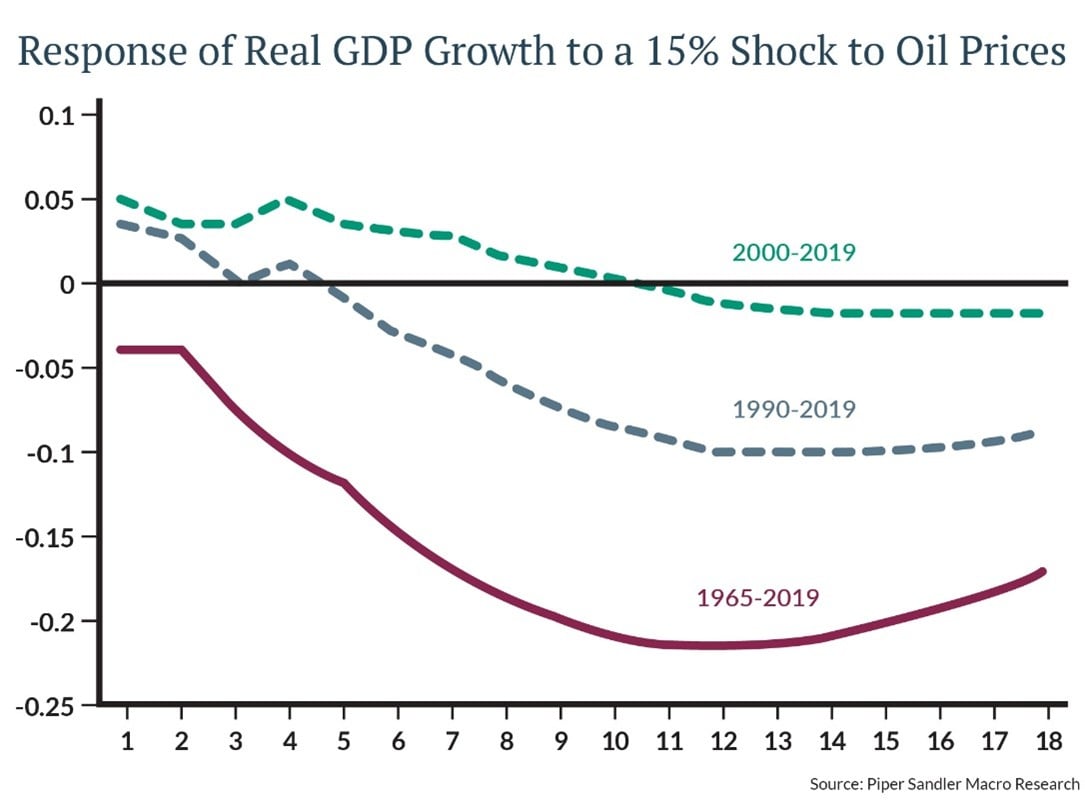
The U.S. simply isn’t as fragile to energy spikes as it once was. More efficient use of energy, a smaller share of household budgets spent on gasoline and greater domestic production all help cushion the blow.
In other words, even when oil jumps, the economic story today is different than the one many of us grew up with.
Oil prices may continue to swing as headlines evolve. If disruptions last, stocks may wobble. Short term reactions are normal when the world feels tense. But the market is not pricing a new economic regime, it’s reacting to today’s uncertainty.
Staying Aligned With Your Plan
In moments like this, the temptation to “do something” can be strong. That temptation, more often than not, is what harms long term results.
Your portfolio is built around:
- Your goals
- Your time horizon
- The amount of risk you need (and want) to take
None of that changes because of a news cycle. The conflict may influence markets day to day, but your financial plan lives on a much longer arc.
There are practical steps worth taking, not as reactions but as part of good ongoing discipline:
- Confirm near term cash needs so your plan stays well funded
- Use volatility, when it comes, as an opportunity to rebalance rather than a reason to retreat
- Keep your decisions anchored to your goals, not to the latest headline
A Final Thought
It’s okay to feel uneasy. The world is complicated, and geopolitics rarely unfold in a straight line. But complexity doesn’t automatically translate into lasting financial harm. The U.S. economy remains resilient, policy remains supportive, and the long term drivers of market returns are still intact.
As always, we’re here — to talk through concerns, answer questions, and help keep your financial life grounded when the news is anything but.