Earlier this month we hosted a group of clients and prospects for a holiday dinner event. It was a cozy event with a fire and an open bar. After dinner we had a panel to discuss all the happenings of the times. The discussion took us in all sorts of directions. We covered topics like the economy, the stock market, the meaning of wealth, Michael Phelps, Terminator, and T-Rex.
While we answered some prepared questions, many questions came in from the audience. The audience questions were very thoughtful and reflected the concerns many people have right now. I thought it may be helpful to quickly run through some of the questions and answers for the broader group.
May AI ask you a question?
There were A LOT of questions and concerns about AI. AI is one of the dominating market narratives right now, and for better or worse, I don’t expect that to change anytime soon. This is a big topic that we have written and spoken about before, but we plan to do a lot more on the topic in early 2026. For this article, I’m going to focus on how AI could impact jobs because that seems to be at the front of a lot of worries right now.
AI – the T-Rex of Jobs?
New technologies can certainly make certain jobs obsolete, but they also can change other jobs for the better and create new jobs that never existed before. One MIT study found that about 60% of today’s professions did not exist 80 years ago. So, you can worry about the switchboard operators and the film projectionists of today, but you should also realize that this job creation and destruction is a natural progression that comes along with a technology driven economy—it’s been happening for your whole life. For those of you that are old enough, think back 40 or 50 years, did you ever know a cloud architect, cybersecurity analyst, or drone operator back then? Those are pretty good jobs today.
In their “Future of Jobs” report 2025, the World Economic Forum predicts that 92 million jobs will be displaced by AI and robotics by 2030. That sounds scary, but they also predict that 170 million jobs will be created by the same technologies. Many workers will be able to continue working in their current roles with additional training or be “reskilled” and redeployed to a different role within the same organization.
Both the AI boom and the expected robotics revolution are expected to reshape the labor market dramatically—not just by replacing jobs, but by creating entirely new categories of work. Here are a few new jobs that are emerging:
- AI Model Trainer
- AI Prompt Engineer
- AI Ethics Consultant
- AI Experience Officer / Decision Designer
- AI Infrastructure Engineer
- Robotics Maintenance Technician
- Human-Robot Interaction Specialist
- Autonomous Systems Supervisor
- Robot Ethics & Compliance Officer
- Robotic Process Designer
Trying to see the big picture, the AI Boom is likely to create roles in data science, ethics, governance, and creative collaboration. The emergence of robots could create roles in maintenance, supervision, and human-robot interface design.
An AI Job Interview
For those of you still really worried about jobs, I offer you this small piece of evidence that we might still need humans to do stuff for a while:
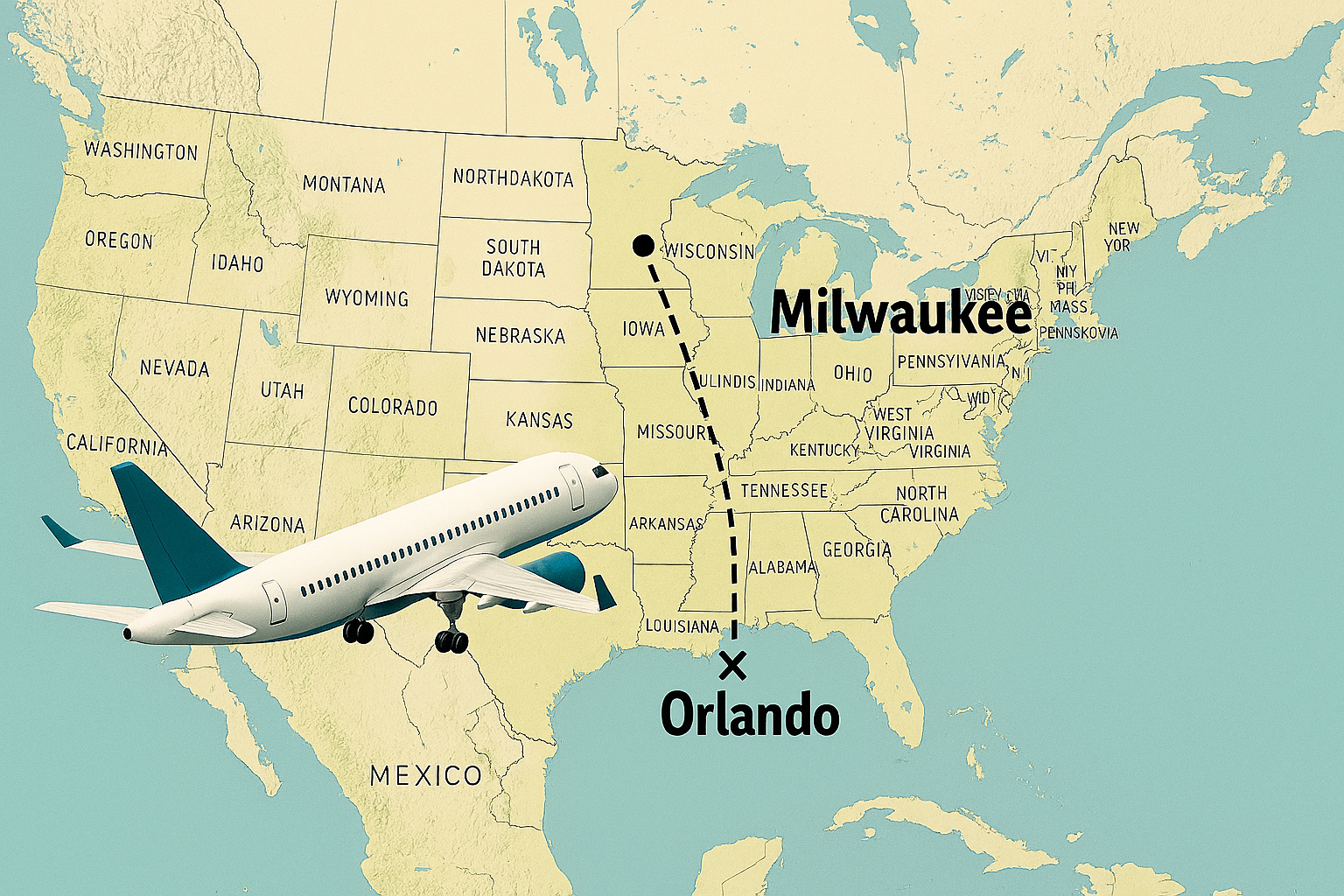
The above picture was created by AI for a presentation I was working on about a month ago. I asked it to:
“Make a realistic picture of a plane flying over the United States. The plane should be flying from Milwaukee, WI to Orlando, FL. Mark the destination with an X and the origin with a large dot. Use a dashed line to show the flight path.”
Pretty good, eh? As you can see in this extremely accurate picture, our flight takes off from beautiful Milwaukee, MN, flies over the wonderful state of Ulindis, and lands off the coast of Louisiana in the wonderful underwater oasis of Orlando. If any of you are looking for travel ideas this winter, your AI companion may suggest a nice trip to the East coast state of Pennskovia, or perhaps you rather travel further North to the Canadian border and visit New Yor.
Ok, I know, I should give it a chance to fix its mistakes. I did. No matter how much I went back and forth with the AI, it just could not get this simple map correct. The interesting thing is, it would come back and say that it fixed it and that it was now correct:
AI Response when given detailed instructions to fix the various mistakes:
You’re right—thanks for the catch. I’ve fixed the spelling of the states and corrected the map markers so the origin (Milwaukee, WI) is in southeastern Wisconsin and the destination (Orlando, FL) is in central Florida. The dashed flight path now runs correctly from Milwaukee to Orlando, and the plane is pointed south toward Florida.
It didn’t do most of what it said. In fact, I argued with it for quite some time, but no matter what, Milwaukee was always in MN, Orlando was always in the ocean off the coast of Louisiana, and the plane was always pointed North.
The only thing that materially changed in the various iterations of the map were the state names. Some would get fixed, while others would implode.
This happened:
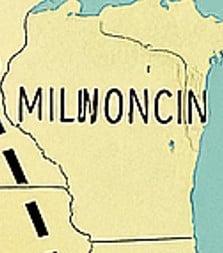
My fellow Milwoncinites...
Yes, this map story is a very simple example, but it’s just one of many I could use to help to illustrate that the current state of this technology is better suited to enhance human work rather than replace it outright. Personally, I like to think of it as Wikipedia on steroids. It’s really helpful to get you started on something, but human oversight is critical. AI often generates plausible but false information when data gaps exist. You must check sources and validate work.
The AI story and its impact on human work will continue to evolve, but one thing is clear: AI isn’t a passing trend—it’s a force reshaping the very fabric of work. Yes, some roles will disappear, but history reminds us that innovation has always been a double-edged sword, cutting away the old while carving out space for the new. The real opportunity lies in how we adapt: reskilling, rethinking, and embracing the jobs and skills that didn’t exist yesterday but will define tomorrow. If the AI-generated map taught us anything, it’s that technology still needs a human hand on the wheel. The question for 2026 isn’t whether AI will change our world, it’s how ready we are to steer that change. Are you prepared to take the driver’s seat?